

Scientific Mould Testing Services in Melbourne
Request a Quote
Fill out the Form below
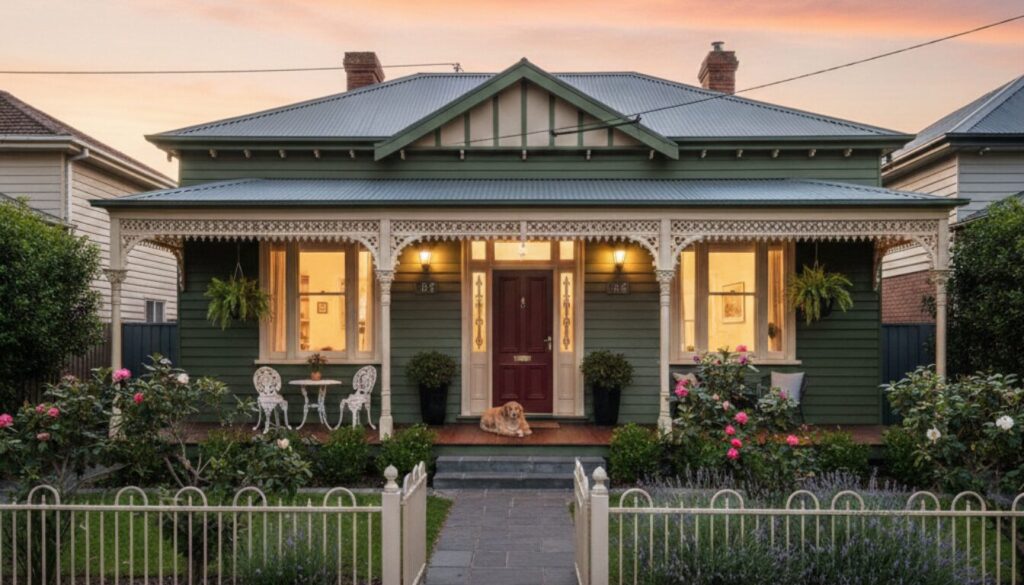
Mould in Melbourne isn’t just a surface-level problem; it’s a consequence of our unique climate and building stock. The classic winter condensation that forms on the single-glazed windows of Victorian terraces in Fitzroy and Carlton is a primary driver for hidden mould. So is the trapped humidity in modern, well-sealed apartment buildings in South Yarra and the Docklands. Mould Experts provides professional, evidence-based mould testing services to identify the specific type and concentration of mould, pinpointing the moisture source so remediation can be effective. We replace generic assumptions with verifiable data.
Our process is built on the IICRC S520 standard, the industry benchmark for professional mould remediation. This ensures every assessment, from initial inspection to final report, follows a strict, science-led protocol. We provide the clear, documented evidence required by property managers, body corporates, and homeowners to make informed decisions.
When is Scientific Mould Testing Necessary in Melbourne?
A visual inspection is the first step, but testing becomes critical in specific scenarios. We often recommend a detailed assessment when:
- A pre-purchase inspection flags musty odours in a home in a high-risk area, such as the damp, leafy suburbs of the Dandenong Ranges or the coastal Bayside communities.
- Post-remediation verification (PRV) is required to confirm a property has been returned to a normal fungal ecology after mould removal work.
- Residents experience persistent respiratory issues or allergies, and hidden mould is suspected behind walls or in sub-floor areas.
- Documentation is needed for a rental compliance issue or an insurance claim, requiring independent, laboratory-verified data.
- The mould source is not obvious, such as when growth appears in the middle of a wall or ceiling, far from typical plumbing or window leaks.
Our IICRC-Compliant Mould Testing Methods
Surface Testing (ASTM D7658)
To identify the species of visible growth, we may take a tape-lift or swab sample directly from the surface. This method is ideal for confirming the presence of toxigenic species like Stachybotrys ("black mould") on water-damaged plasterboard or confirming *Aspergillus* or *Penicillium* on decaying window frames. The samples are sent to a NATA-accredited lab for microscopic analysis.
View ServiceMoisture Testing
Mould cannot exist without moisture. We use professional-grade diagnostic tools, including FLIR thermal imaging cameras and Tramex moisture meters, to identify temperature anomalies and elevated moisture content within building materials. This allows us to map the extent of water damage, often tracing it back to a specific source like a failed waterproofing membrane or a plumbing leak, without needless destruction.
View ServiceAir Sampling (ASTM D7391)
If a hidden mould source is suspected or there are indoor air quality concerns, we perform air sampling. Using a calibrated air pump with an Air-O-Cell cassette, we capture airborne fungal structures. We always take a baseline outdoor air sample for comparison, which is essential for correctly interpreting indoor spore counts. Elevated levels of species like *Aspergillus/Penicillium* indoors can indicate a hidden colony flourishing within a wall cavity or sub-floor.
View ServiceWhy Melbourne Homeowners and Property Managers Trust Our Analysis
IICRC Certified & S520 Compliant
Our technicians hold Institute of Inspection, Cleaning and Restoration Certification (IICRC) in Applied Mould Remediation. We strictly follow the Australian Standard AS-IICRC S520:2025, ensuring our work meets the highest professional benchmark.
NATA-Accredited Laboratory Analysis
We do not analyse our own samples. All tests are processed by an independent NATA-accredited laboratory, providing you with objective, defensible data.
Local Building Knowledge
We have documented mould patterns unique to Melbourne, from rising damp in Hawthorn's brick homes to condensation-driven growth in Heidelberg's apartment blocks. This experience allows us to investigate more efficiently.
Clear, Actionable Reports
Your report won't be a list of confusing numbers. We translate the lab results into plain English, explaining exactly what was found, where it was found, and providing a clear, step-by-step remediation plan based on the S520 standard.
Mould Testing FAQs
Does mould testing remove mould?
No. Testing is a diagnostic service that identifies the scope and type of contamination. It is the essential first step for planning an effective remediation strategy.
How long does the on-site testing take?
A typical on-site assessment and sampling visit takes 60-90 minutes. Laboratory turnaround times for sample analysis are generally 3-5 business days.
Is testing always required before removal?
If mould is clearly visible and the source is obvious, you may be able to proceed directly to remediation. However, testing is highly recommended when mould is suspected but not seen, for post-remediation verification, or for any legal or compliance purposes.
Book Your IICRC-Certified Mould Assessment
If you suspect mould or require documented proof of contamination levels, contact our team. We provide scientific mould testing services for homes, apartments, and commercial buildings across Melbourne.
Request a Quote
Fill out the Form below